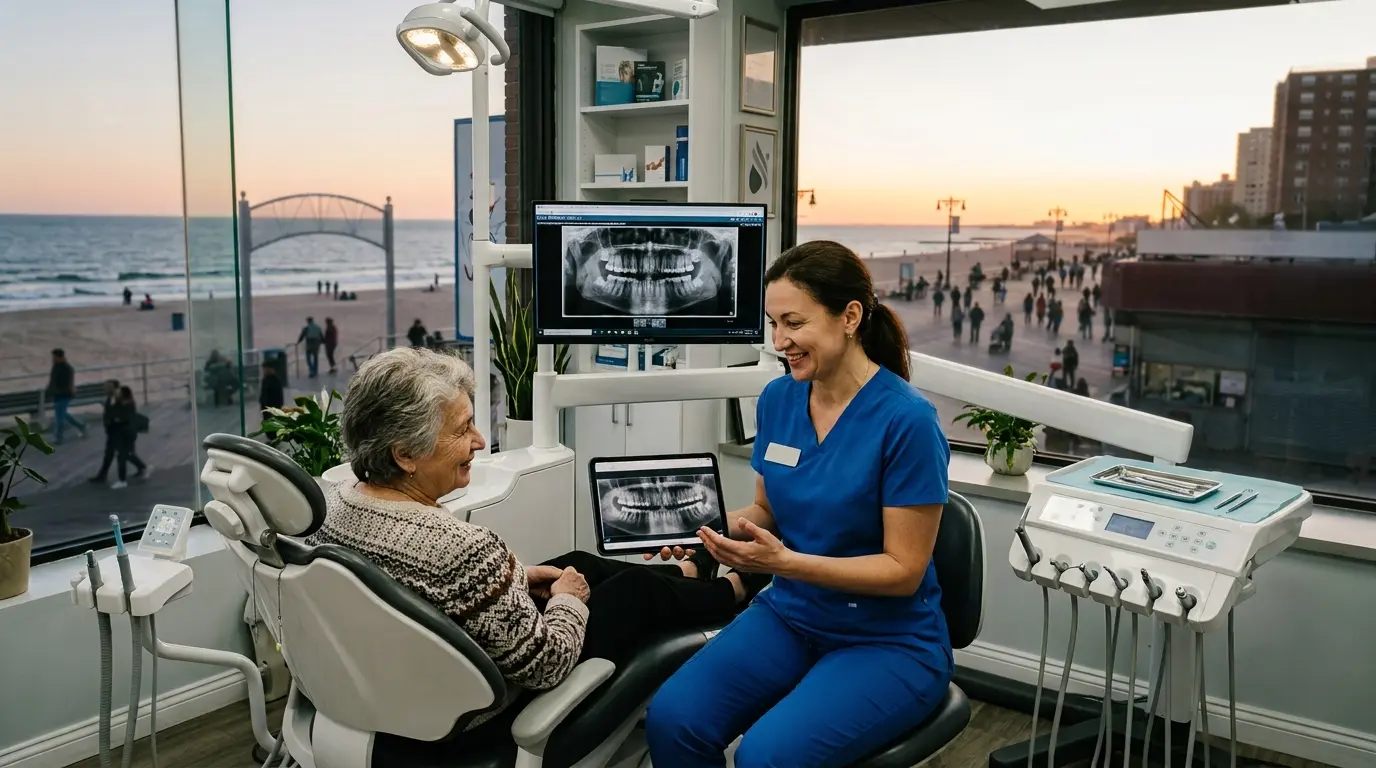
If you’re looking for a Russian-speaking dentist in Brighton Beach, the real test isn’t whether someone at the front desk says “hello” in Russian. It’s whether the dentist can sit you down, in Russian, and explain exactly what’s wrong with your teeth and what it’ll cost to fix.
Why does the language you speak at the dentist actually matter?
Here’s the thing about dental visits: almost everything that happens depends on you understanding what’s being said. Before a dentist can treat you, you need to give informed consent, meaning you actually understood what you agreed to, not just signed a form because someone told you to.
Walk through what a normal visit covers:
- What’s actually wrong with your tooth or gums
- Your options, and what each one costs
- Any risks, however small
- How to take care of your mouth once you leave?
- If any of that gets lost because of a language gap, you leave the office with a treatment plan (the dentist’s roadmap for fixing your dental problems) you never fully understood in the first place. Maybe you nodded along. Maybe you just wanted the appointment to end. Either way, that’s a problem, and it’s a common one.
A lot of Russian-speaking patients in Brighton Beach grew up around a completely different kind of dental care, sometimes stricter, sometimes less explained, often more painful. Coming into a new system where you also don’t fully understand the language on top of everything else? That’s a lot to ask someone to just push through.
What should you ask before you even book an appointment?
Call first. Ask if the dentist personally speaks Russian, not just someone answering phones. Then ask how they’ll walk you through your treatment plan and your costs.
A few questions worth asking on that first call:
- Does the dentist speak Russian, or only the front desk staff?
- Will someone explain my treatment plan to me in Russian, step by step?
- Will my insurance be explained in Russian too, or just handed to me as paperwork?
- Can I ask questions in Russian mid-exam if I don’t understand something?
- You’ll notice pretty quickly which offices answer these without hesitation and which one’s start hedging. “Someone can probably help you out” usually means the Russian-speaking part stops at small talk.
How do you tell a real bilingual practice from one that just says it is?
A real bilingual dental office has the actual dentist speaking Russian with you during your exam, not a rushed translation from someone standing nearby. Your written treatment plan should be available in Russian too.
Some signs it’s the real thing:
- The dentist speaks Russian directly, during the exam itself
- You get a written treatment plan and cost breakdown in Russian, not just verbal reassurance
- Insurance terms (deductible, copay, PPO network) get explained in Russian, without rushing through it
- You’re actually invited to ask questions, and you get a real answer back
And some signs it isn’t:
- “Russian spoken here” shows up on the website with zero detail beyond that
- Someone translates quickly during your exam, but the dentist himself never speaks Russian
- Paperwork comes in English only, and you’re told to “just sign here”
- Your questions get short, vague answers instead of a real explanation
This is where a lot of general local listings fall short. Here’s how Russian-speaking dental care in Brooklyn works at Trump Village Dental, from the first call to aftercare. They’ll casually mention “multilingual staff” somewhere in the copy, then leave it at that. Patients book based on that one line, then find out the actual clinical conversation still happens almost entirely in English once they’re in the chair.
Does your insurance still work the same way here?
Yes. A Russian-speaking dentist should still take your PPO, your Medicaid managed plan, or your Medicare Advantage dental benefit, same as any other office, and explain how that coverage works in Russian.
What to look for:
- Insurance gets verified before your visit, not after you’re already in the chair
- Coverage and out-of-pocket costs get explained clearly, in Russian
- CareCredit or a payment plan is offered if you don’t have dental insurance
- Nobody pushes you into treatment before you understand what it costs
For older patients on fixed incomes and for families watching every dollar, this one detail, understanding your own coverage, can be the difference between getting treated and putting it off another year.
What should actually happen during your first visit?
Your first visit should include a real conversation in Russian about your dental history, a clear walkthrough of the exam findings, and a written treatment plan you can actually read before agreeing to anything.
That typically looks like:
- Your health history gets taken in Russian, not handed to you as an English form to fill out alone
- The dentist explains findings as he goes, not just at the end
- X-rays or photos get shown to you directly, with plain explanations (for example, “periodontitis” simply means advanced gum disease that can eventually loosen your teeth)
- You get a written treatment plan with cost estimates before any work starts
- Nobody’s rushing you out the door before your questions are answered
If a visit skips most of this, that’s worth noticing, even if the practice technically speaks Russian.
Why does this matter even more for older patients and busy families?
Older patients dealing with implants or extractions need every risk and recovery detail explained clearly, no shortcuts. Families juggling work and kids need answers fast, the first time, without a second visit just to clear up confusion from the first one.
For someone weighing implant options later in life, having a dentist who can walk through timelines and costs directly, in the language they’re most comfortable in, takes a huge amount of anxiety off the table. And for working families, flexible scheduling matters too. Trump Village Dental is open Monday through Friday and on Sundays, 10 AM to 6 PM (closed Saturdays), which gives most working patients a real shot at getting seen without missing a shift.
Many of our Russian-speaking patients bring in an elderly parent for the same visit, and we’ve put together a full guide for adult children bringing an elderly parent to the dentist covering everything from Medicare questions to what to expect at the first appointment.
Quick checklist before you book
| What to check | Why it matters |
|---|---|
| Dentist speaks Russian directly, not just staff | Can wait for a regular appointment |
| Written treatment plans in Russian | See a dentist within 24-48 hours |
| Insurance explained in Russian | No surprise bills, no confusion over coverage |
| Sunday availability | DeFewer missed shifts, less scheduling stress |
| Time given for your questions | Shows respect for your understanding, not rushed care |
Frequently Asked Questions
No. Cost is based on the procedure, not the language spoken during your visit. You shouldn’t pay extra just because your dentist happens to speak Russian.
You can, and plenty of people do. But a dentist who speaks Russian directly can answer your specific questions more accurately than a quick translation can.
Yes, actually. The hygienist still needs to explain any gum disease or cavity risk clearly, in Russian if that’s your language. Small problems caught early stay small.
Yes. Trump Village Dental is open Monday through Friday and Sundays, 10 AM to 6 PM, and closed Saturdays, which gives working patients more room to get seen.
Call ahead and have the office verify your specific plan before your visit. A trustworthy Russian-speaking dental office will confirm your coverage and explain it in Russian before any treatment starts.
Looking for a dentist who’ll actually explain things in your own language? Contact Trump Village Dental to book a visit, or read more about the practice on the About Us page.