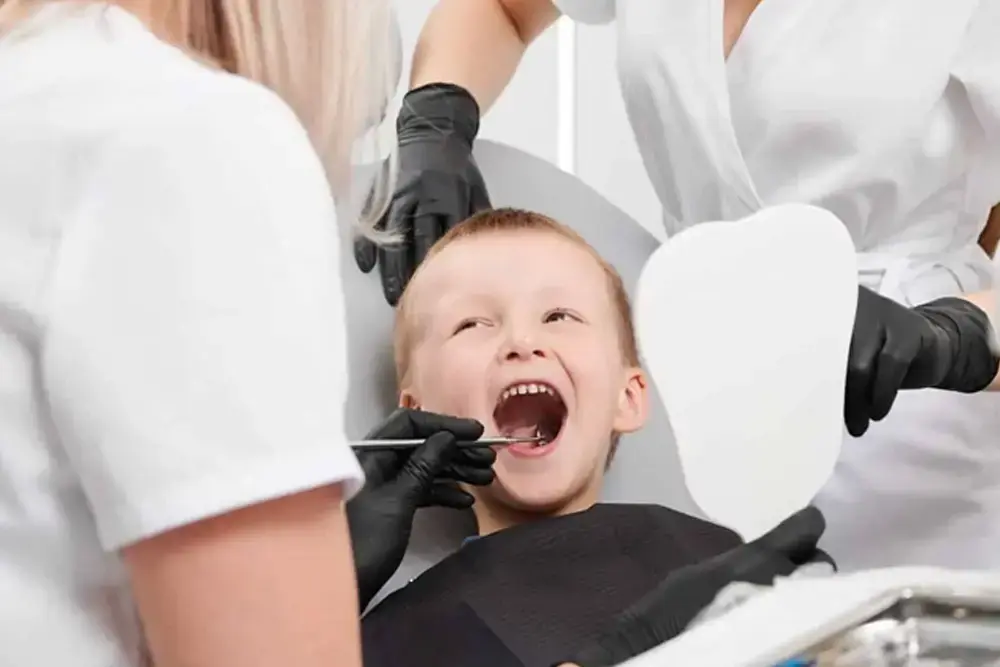
Your child should see a dentist by their first birthday, or within six months of the first tooth coming in, whichever happens first. Early visits catch problems before they start and help kids feel calm about the dentist for life.
If that number surprised you, you’re not alone. A lot of South Brooklyn parents wait until age three, four, or even until a tooth hurts. By then, small habits have already become harder to fix. The good news is a first visit doesn’t need to be scary, for your child or for you.
At Trump Village Dental on Coney Island Ave, we see families from Brighton Beach, Sheepshead Bay, and Coney Island every week, and It’s why so many parents choose a dentist who speaks your family’s language from the very first visit. who are bringing in a toddler for the very first time. Our team speaks English, Ukrainian, German and Russian, so parents who feel more comfortable explaining their child’s habits or fears in their native language never have to struggle through a language barrier during something this personal.
Why Does a One-Year-Old Even Need a Dentist?
A one-year-old needs a dentist because baby teeth guide the growth of adult teeth and jaw shape, and early decay can spread fast in small mouths. Catching it early is much easier than fixing it later.
Baby teeth aren’t just placeholders. They hold space for permanent teeth, help your child chew and speak clearly, and support healthy jaw development. Cavities in baby teeth aren’t harmless either. Untreated decay can cause pain, infection, and even affect the adult tooth growing underneath.
Here’s what an early visit actually catches:
- Early signs of tooth decay, often before you’d notice anything yourself
- Teething problems that mimic other symptoms like fussiness or fever
- Bite issues that are easier to guide at 12 months than at 5 years
- Habits like thumb sucking or bottle use at bedtime that can affect tooth alignment
Regular general dentistry checkups in Brooklyn build on this early start, keeping small issues from turning into bigger ones as your child grows.
What Actually Happens at a Baby’s First Dental Appointment?
A first visit is short, gentle, and mostly about you, not just your child. The dentist checks for early decay, teething progress, and reviews brushing habits, usually finishing in under 20 minutes.
Most parents picture a full exam with X-rays and a dental chair. That’s not what a first visit looks like. Your child often sits on your lap. The dentist does a quick, light look at the gums and any teeth that have come in. There’s no drilling, no needles, nothing invasive.
A typical first appointment covers:
| What Happens | Why It Matters |
|---|---|
| Quick visual exam of gums and teeth | Spots early decay or spacing issues |
| Teething and eruption check | Confirms teeth are coming in on schedule |
| Brushing and diet review with parents | Prevents cavities before they start |
| “Knee-to-knee” exam for infants | Keeps baby calm, parent stays close |
| Fluoride varnish (age-appropriate) | A thin protective coat that fights cavities |
Fluoride varnish is a mineral coating painted directly on the teeth. It hardens the outer layer of enamel (the tooth’s protective shell) so cavities have a harder time starting.
How Do You Prepare a Toddler Who’s Scared of the Dentist?
Prepare a toddler by keeping the visit low-key, using simple words instead of scary ones, and avoiding personal horror stories about your own dental fear. Kids pick up on your tone faster than your words.
A few things that actually work with the families we see:
- Skip words like “shot,” “drill,” or “hurt.” Say “count your teeth” or “give your teeth a checkup” instead.
- Don’t over-explain days in advance. One short, calm conversation the morning of the visit is plenty for a toddler.
- Bring a comfort item, a small toy or blanket, if your child has one.
- Schedule morning appointments when kids are usually less tired and more cooperative.
- Let them watch you get your own teeth checked first if that’s an option. Kids copy calm.
If your child has extra anxiety, or if English isn’t the easiest language for your family to process medical information in, tell our front desk when you book. Our multilingual dental team includes English, German, Ukrainian, and Russian-speaking staff who can explain each step directly to your child in the language they hear at home, which calms nerves faster than any toy in the waiting room.
What If My Child Already Has a Cavity or Damaged Tooth?
If your child already has a cavity, don’t wait for the “right time” to bring them in. Baby tooth decay spreads faster than adult tooth decay and can turn into an infection within weeks if left alone.
Signs to watch for between now and their first cleaning:
- White or brown spots on teeth, especially near the gumline
- Complaining about hot or cold foods
- Visible holes or dark spots
- Swelling near a tooth or unusual bad breath
None of these mean you did something wrong as a parent. Baby teeth have thinner enamel than adult teeth, so decay moves fast even with decent brushing habits. What matters is catching it early. We offer same-day emergency access for exactly these situations, so a suspicious spot doesn’t have to sit on your calendar for three weeks while it gets worse.
How Much Does a Child’s First Dental Visit Cost in Brooklyn?
Most PPO and Medicaid managed care plans cover a child’s first preventive dental visit at little to no out-of-pocket cost, since preventive pediatric care is considered essential coverage under most plans.
We work with local PPO networks and Medicaid managed care plans that many South Brooklyn families already carry. Before your visit, our team can check your specific plan and give you a clear number, not a guess, so you’re not surprised at checkout. For families without insurance, we’ll walk through flexible payment options so cost never becomes the reason a cavity goes untreated.
When Can We Actually Get an Appointment?
We’re open 10 AM to 6 PM, Sunday through Friday, and closed Saturday. That Sunday availability matters most for families juggling work schedules and school pickups who can’t take a weekday off for a routine checkup.
A lot of dental offices in Sheepshead Bay and Coney Island are closed Sunday and only open on weekday business hours. For a parent working a retail shift or a job with unpredictable hours, that can mean weeks of trying to find a slot. Our six-day daytime schedule, including Sundays, gives families more real windows to get a toddler in without missing work or school. Ready to get started? Book your child’s first visit and we’ll walk you through what to expect.
Building Habits That Last Past the First Visit
The first visit sets the tone, but daily habits at home do the heavy lifting. A few simple rules go a long way:
- Start brushing as soon as the first tooth appears, using a rice-grain-sized smear of fluoride toothpaste.
- Avoid putting a child to bed with a bottle of milk or juice. It pools around the teeth overnight and feeds decay.
- Switch from bottle to cup around 12 months when possible.
- Schedule the next checkup at 6-month intervals, not “whenever something looks wrong.”
Kids who grow up with regular, low-stress dental visits are far less likely to develop dental anxiety as adults. That first appointment on Coney Island Ave might be the reason your child grows up not dreading the dentist’s chair the way a lot of adults do.
Frequently Asked Questions
No, two teeth is exactly the right time. The rule is first tooth or first birthday, whichever comes first, so two teeth already means it’s time to schedule.
Almost never. X-rays are usually held off until a child is older or the dentist sees something on the visual exam that needs a closer look.
Yes, our team includes English, German, Ukrainian, and Russian-speaking staff, so families can ask questions and get explanations in the language they’re most comfortable with.
That’s normal and expected. Our team is experienced with first visits and will slow down, use a knee-to-knee position with you, and never force an exam a child isn’t ready for.
Yes, we’re open Sundays through Fridays from 10 AM to 6 PM, which makes it easier for working parents to get a weekend slot without missing a workday.