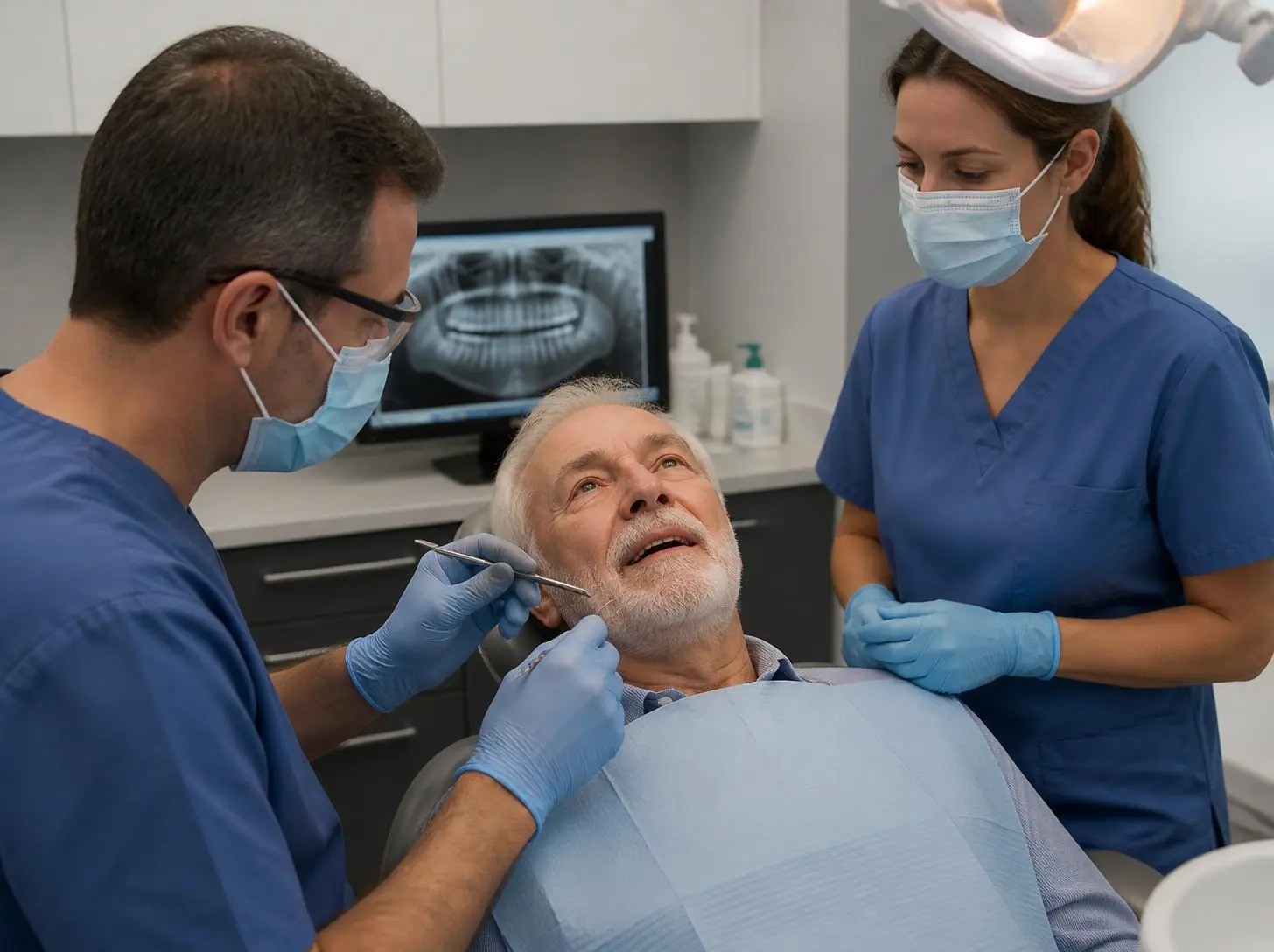
Patients past 60 ask us this more than any other age group, usually assuming the answer is no before they even sit down. It usually isn’t.
The question itself is the wrong one. Age on its own has never disqualified a patient from getting an implant. What actually decides it is a short list of health factors that apply just as much to a 45-year-old as a 75-year-old.
At Trump Village Dental on Coney Island Ave, we walk every senior patient through those factors before recommending anything, so the decision is based on your bone and your health, not a number on a birth certificate. You can see the full range of options, timelines, and what to expect on our dental implant service page before your first visit.
Is age actually a barrier to dental implants?
No dental board or manufacturer sets an upper age limit on implants. Patients in their 70s and 80s get them regularly, as long as the jawbone and overall health check out.
What actually gets checked is bone density, not a birthdate. A healthy, active 78-year-old with good bone density is often a better candidate than a 50-year-old with advanced gum disease and years of untreated bone loss.
What matters more than age: bone density and overall health
Years without a tooth, or years of denture wear, can thin the jawbone underneath. A 3D scan shows exactly how much bone is there before we recommend anything.
A handful of health conditions matter more than the number of candles on last year’s cake.
| Health factor | Why we check it | What it usually means |
|---|---|---|
| Bone density | The jawbone needs enough density to anchor the post | A 3D scan settles it either way |
| Diabetes | Well-controlled blood sugar heals normally | Poorly controlled cases may need a delay |
| Osteoporosis | Some medications for it affect bone healing | We review your medication list first |
| Blood thinners | They can affect bleeding during placement | We coordinate timing with your physician |
| Heart conditions | Some require antibiotic precautions before surgery | We check this against your cardiologist’s notes |
Common myths about implants and age
A lot of what seniors have heard about implants and age turns out to be outdated or just wrong.
| The myth | What’s actually true |
|---|---|
| You can be too old for implants | There’s no upper age cutoff; bone density and health decide it, not age |
| Healing takes years for seniors | Most patients, at any age, are back to normal eating within a few months |
| Dentures are always the safer choice | Dentures carry their own risks, like slipping or accelerating bone loss |
| Medications rule out implants automatically | Most medications just require coordination, not automatic disqualification |
Diabetes, osteoporosis, and blood thinners: what we check first
Diabetes that’s well managed heals about the same as anyone else’s. Poorly controlled blood sugar is the actual concern, not the diagnosis itself.
Some osteoporosis medications, and blood thinners, change how we time the procedure. We review your full medication list before setting a treatment plan, and coordinate with your physician when needed.
Certain heart conditions call for an antibiotic beforehand, a standard precaution, not a reason to rule anything out. We check this against your cardiologist’s notes as part of the same visit.
How healing time changes as we get older
Healing depends far more on bone density and circulation than on age alone. Most patients, at any age, are back to normal eating within a few months of placement.
What does tend to shift with age is the pace of the appointment schedule itself. We’re often happy to space visits out a bit more for patients juggling other doctor’s appointments or family caregiving.
If a missing tooth needs to come out first, see what to expect from a tooth extraction before the implant process even begins. Curious if the faster option works for older patients too? We cover what same-day dental implants involve in Brooklyn separately
Implants vs dentures for older patients
Dentures cost less upfront but can shift while eating or speaking, and they don’t stop the jawbone from thinning over time the way an implant does.
We compare both honestly, including what dental dentures typically cost in Brooklyn if a denture ends up being the better fit for your budget.
Switching from dentures to implants later in life
A lot of senior patients come in already wearing dentures and wondering if it’s too late to switch. It rarely is.
Years of denture wear can thin the jawbone underneath, since dentures don’t stimulate bone the way a natural tooth root does. A 3D scan tells us whether that bone loss means grafting is needed before an implant can go in, or whether there’s still enough there to place one directly.
Cost and financing considerations for seniors
Cost tends to be the first question right after safety, especially for patients on a fixed income.
Our separate breakdown of what dental implants cost in Brooklyn covers what actually drives the price, whether or not insurance is involved.
Original Medicare doesn’t cover implants, and most Medicare Advantage dental add-ons don’t stretch far enough to cover one either. Our guide to how dental insurance works in Brooklyn explains what to actually expect from your specific plan.
CareCredit remains the most common way patients cover the gap, splitting the balance into monthly payments instead of one lump sum.
Getting ready for a senior-friendly consultation
Bring your full medication list, including anything for diabetes, osteoporosis, or blood thinning. It’s the single most useful thing you can hand us at the first visit.
If a family member usually helps with appointments or paperwork, they’re welcome to sit in on the consultation. A lot of patients find it easier to weigh the decision with someone else in the room.
If a Russian, Ukrainian, or German-speaking staff member would make things easier, ask for one when you book, and mention it if mobility or elevator access matters for getting to our second-floor office.
Frequently Asked Questions
No. There’s no upper age limit. What matters is bone density and overall health, which we check with a 3D scan and a review of your medical history.
Often, yes. Well-controlled diabetes typically heals normally, and we review any osteoporosis medications first since a few affect bone healing.
Healing time depends more on bone density and health than age alone, and we walk through your expected timeline before treatment starts.
It depends on your bone density, budget, and how many teeth are missing. We compare both options honestly at your consultation.
Often, yes, though years of denture wear can thin the jawbone, so a 3D scan tells us whether grafting is needed first.
CareCredit lets you split the cost into monthly payments, and we check what your Medicare Advantage or other plan actually covers before treatment starts.